Events—whether conferences, trade shows, expos, or summits—bring together highly targeted audiences in one place. For B2B companies, these audiences represent potential buyers, partners, and long-term customers. However, turning events into a repeatable growth channel depends on one critical asset: a reliable List of Customers That Attend the Event.
Many businesses struggle to build such lists without relying on guesswork, outdated spreadsheets, or labor-intensive manual research. This article explains how to systematically and ethically identify customers who attend events, how to structure and enrich that data, and how modern tools make the process scalable.
Why Event Attendees Are High-Value Customers
Customers who attend events are fundamentally different from cold leads. They have already demonstrated intent by:
✅ Registering for an industry-specific event
✅ Spending time attending sessions or visiting booths
✅ Engaging with speakers, vendors, or sponsors
Because of this, a List of Customers That Attend the Event often delivers higher engagement rates, better response rates, and shorter sales cycles than traditional outbound prospecting.
From a marketing perspective, event attendees are already context-aware. They recognize industry terminology, understand common challenges, and are more receptive to follow-up conversations.
Common Challenges in Compiling Event Attendee Customer Lists
Before exploring solutions, it’s important to understand why this task is difficult.
Limited Public Access
Most event organizers do not publish full attendee lists due to privacy and compliance requirements.
Fragmented Data Sources
Information is scattered across registration systems, CRM tools, social platforms, and event apps.
Manual Research Doesn’t Scale
Searching LinkedIn, scraping websites, or copying names from PDFs is slow and error-prone.
Data Quality Issues
Even when names are available, job titles, company size, and verified emails are often missing.
Because of these challenges, many teams fail to build a usable List of Customers That Attend the Event, even after attending or sponsoring multiple events.
Step 1: Define What “Customer” Means for Your Business
✅ Target industries
✅ Ideal job titles or seniority
✅ Company size and location
✅ Buying intent or influence
This clarity ensures the list you compile supports real business outcomes rather than vanity metrics.
Step 2: Use First-Party Data When Available
If you are an event organizer, sponsor, or exhibitor, first-party data is your most reliable starting point.
Registration Forms
Event sign-ups can capture:
✅ Name and company
✅ Job role
✅ Business email
✅ Industry
Clear opt-in language and transparent data usage are essential for compliance.
Booth Interactions
Badge scans, QR codes, or lead capture forms help identify attendees who actively engaged with your brand.
This method often produces the most qualified subset of your audience.
Step 3: Leverage Event-Related Website Traffic
Many attendees interact with event websites, speaker pages, sponsor profiles, or session landing pages before and after the event.
By analyzing event-related website traffic, businesses can:
✅ Identify companies visiting key pages
✅ Understand interest based on content consumption
✅ Connect anonymous visits to firmographic data
This approach uncovers customers who may not have filled out forms but still attended or engaged with the event ecosystem.
Step 4: Use Reliable B2B Event Data Platforms
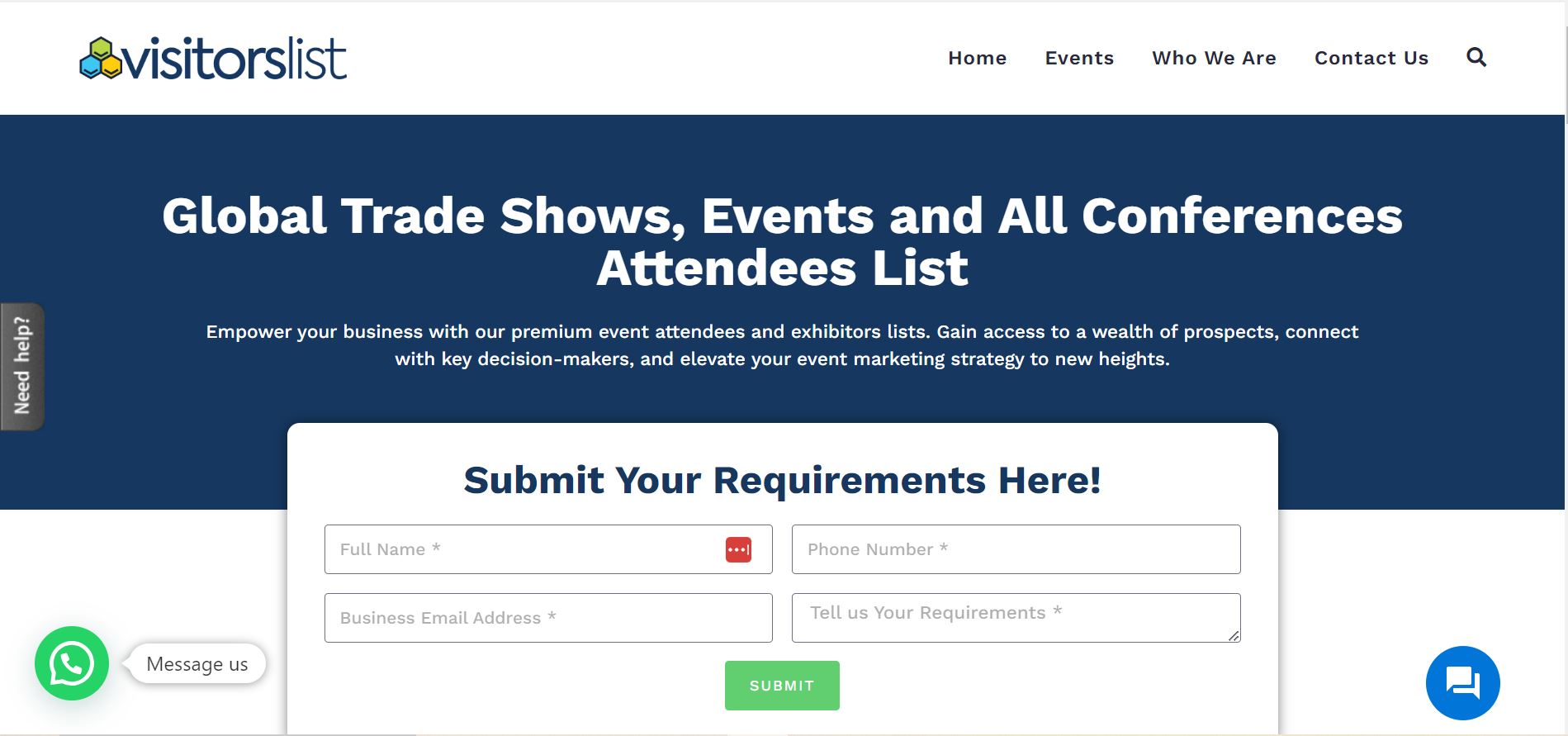
To scale beyond first-party data, businesses increasingly rely on specialized B2B data platforms.
Solutions like VisitorsList help identify customers who attended specific events by combining behavioral signals, company intelligence, and verified contact data.
These platforms typically provide:
✅ Confirmed event attendance indicators
✅ Company and decision-maker details
✅ Verified business email addresses
✅ Segment by event, role, industry, and geography
Using such tools allows teams to build a List of Customers That Attend the Event without manual research while maintaining accuracy and compliance.
Why Choose VisitorsList
VisitorsList helps businesses build accurate and scalable event attendee lists without manual research.
✅ Identifies real event attendees using first-party and post-event engagement signals
✅ Provides verified company and contact-level data for better outreach
✅ Ensures high data accuracy with enriched and validated profiles
✅ Supports GDPR- and CAN-SPAM-compliant data practices
✅ Scales easily across multiple events, industries, and regions
✅ Integrates smoothly with sales and marketing workflows
By turning event activity into actionable insights, VisitorsList helps businesses move from one-time event follow-ups to predictable, data-driven growth.
Build Your Perfect Exhibitors List with VisitorsList
Choose VisitorsList and experience the difference. Start building targeted exhibitor lists with our comprehensive, updated database.
Step 5: Monitor Post-Event Engagement Signals
Post-event behavior is often more valuable than pre-event registrations.
High-intent signals include:
✅ Downloading session recordings
✅ Attending post-event webinars
✅ Visiting follow-up landing pages
✅ Engaging with recap emails or content
Capturing these signals helps refine your list and prioritize customers most likely to convert.
Step 6: Enrich and Validate the Data
✅ Accurate job titles
✅ Company size and revenue
✅ Industry classification
✅ Verified contact details
Validation ensures emails are deliverable and contact information is current. This step is essential before launching outreach campaigns.
How to Structure an Effective Event Attendee Customer List
A usable list should include more than just names.
Recommended fields:
✅ Full name
✅ Job title and department
✅ Company name and website
✅ Industry and company size
✅ Location
✅ Engagement source (event, session, booth, page visited)
Structuring data properly allows for segmentation, personalization, and analytics.
Best Practices for Compliance and Trust
✅ Use GDPR- and CAN-SPAM-compliant sources
✅ Avoid scraping private or gated lists
✅ Provide clear opt-out options
✅ Store and process data securely
Ethical data practices protect your brand and improve long-term engagement.
How to Activate the List for Revenue Growth
Once built, a List of Customers That Attend the Event becomes a powerful growth asset.
✅ Personalized Email Campaigns
Reference the specific event or topic to increase relevance and response rates.
✅ Sales Enablement
Give sales teams context about attendee interests and engagement history.
✅ Account-Based Marketing
Target accounts where multiple stakeholders attended the same event.
✅ Retargeting and Nurture Campaigns
Deliver content aligned with sessions or themes attendees engaged with.
| Manual Methods | Data-Driven Methods |
|---|---|
| Time-consuming | Fast and scalable |
| Incomplete data | Enriched profiles |
| Hard to update | Continuously refreshed |
| Low consistency | High accuracy |
Long-Term Value of Event Attendee Data
Event data should not be treated as one-time use.
When stored and maintained correctly, it can support:
✅ Future event targeting
✅ Lookalike audience creation
✅ Trend analysis across industries
✅ Strategic planning and forecasting
Over time, this data becomes a competitive advantage.
Try Before You Buy – Request Your Free Exhibitors List Sample Today!
Experience the accuracy of our data with a free sample exhibitors list! Get a glimpse of how VisitorsList can boost your event strategy with tailored, up-to-date exhibitor information.
Final Thoughts
Building a reliable List of Customers That Attend the Event is no longer about chasing spreadsheets or guessing who showed up. By combining first-party engagement, post-event signals, and trusted B2B data platforms, businesses can create accurate, compliant, and actionable attendee lists at scale.
With the right strategy and tools, events transform from isolated marketing activities into predictable, data-driven growth engines.
FAQs
A reliable attendee list helps businesses identify high-intent prospects who have already shown interest by attending an event. This improves targeting, engagement rates, and overall marketing ROI.
The most effective approach is combining first-party engagement data, post-event behavioral signals, and trusted B2B data platforms like VisitorsList. This ensures accuracy, scalability, and compliance.
Manual research is time-consuming, difficult to scale, and often results in incomplete or outdated information. Modern data-driven tools provide faster access to verified and enriched attendee data.
Post-event signals include actions like downloading event content, visiting follow-up pages, or attending recap webinars. These signals help identify attendees with strong buying intent.
B2B data platforms aggregate behavioral and intent data to identify event attendees accurately. Platforms like VisitorsList help businesses build compliant, actionable attendee lists without manual effort.
Yes, as long as the data is collected from compliant sources, follows regulations like GDPR and CAN-SPAM, and provides clear opt-out options.
Event attendee lists can be used for personalized email campaigns, sales follow-ups, account-based marketing, retargeting ads, and long-term lead nurturing strategies.
Absolutely. When maintained properly, attendee data can be reused for future campaigns, audience insights, and strategic planning—turning events into ongoing growth engines.
Get a Quote
Using such tools allows teams to build a List of Customers That Attend the Event without manual research while maintaining accuracy and compliance.